01QC
Quantum computing
What does a different model of computation make possible? I’m interested in quantum information, the structure of quantum states, and the resources that useful quantum computation requires.
Quantum information notes
My name is Yadukrishna Raghu—in vernacular: Yadu. I'm interested in how nontraditional (mainly quantum) compute facilitates scaling intelligence. In the past, I've published astrophysics research constraining the local stellar mass distribution. I also love art & history from pre-modern Europe & South Asia.
How can different kinds of compute
help us scale intelligence?
Math & physics at UC Berkeley.
Thinking across quantum information, learning, and geometry.
What does a different model of computation make possible? I’m interested in quantum information, the structure of quantum states, and the resources that useful quantum computation requires.
Quantum information notesThe intersection: how quantum systems might change the way we represent information and learn from it. I’m interested in where that connection leads to a useful computational advantage.
Reading guidesHow intelligence scales, and what makes learning work. My interests connect deep learning with the geometry of representations and the compute that supports them.
Machine learning notesFeatured paper · First author · 2024
Brown dwarfs cool as they age. The same temperature can belong to a young, low-mass object or an older, more massive one—so weighing an entire population takes an indirect approach.
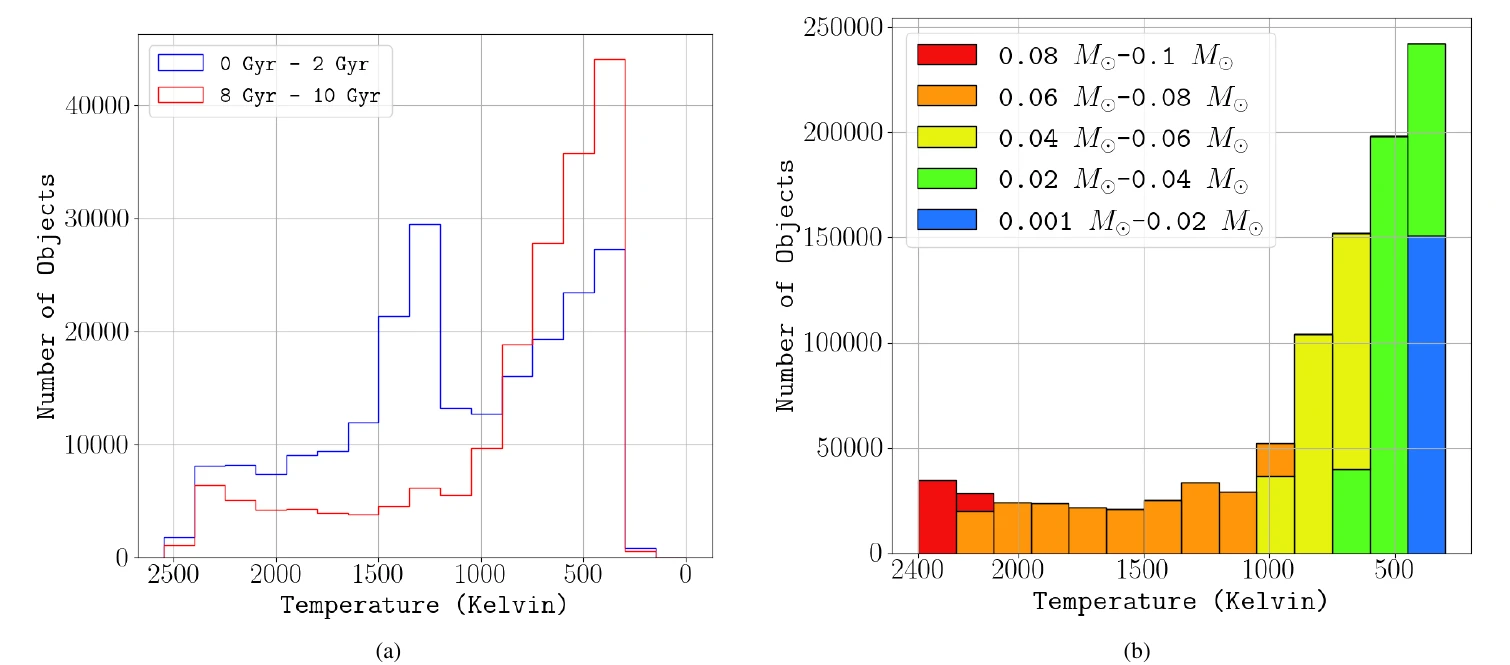
In my work with collaborators, we simulated brown dwarf populations with different mass functions, birthrates, and low-mass cutoffs. Comparing their predicted temperatures with the local 20-parsec census let us constrain how mass is distributed at the low-mass end of star formation.
A closer look · The L/T transition
Our simulations predict an excess of younger brown dwarfs around 1200–1350 K, where L dwarfs transition into T dwarfs. In the Saumon & Marley evolutionary models, a pile-up just before this transition suggests that cooling slows in this region.
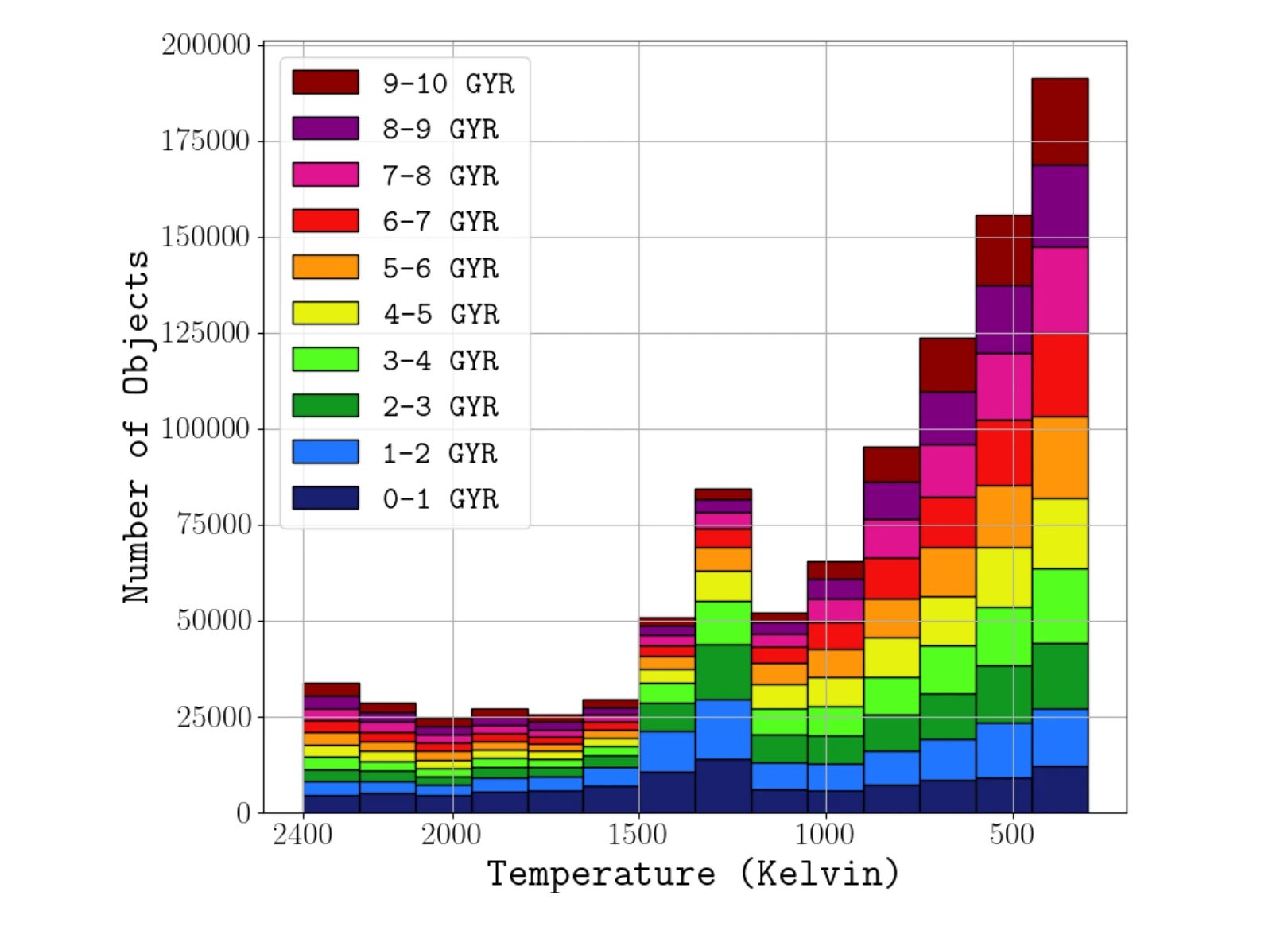
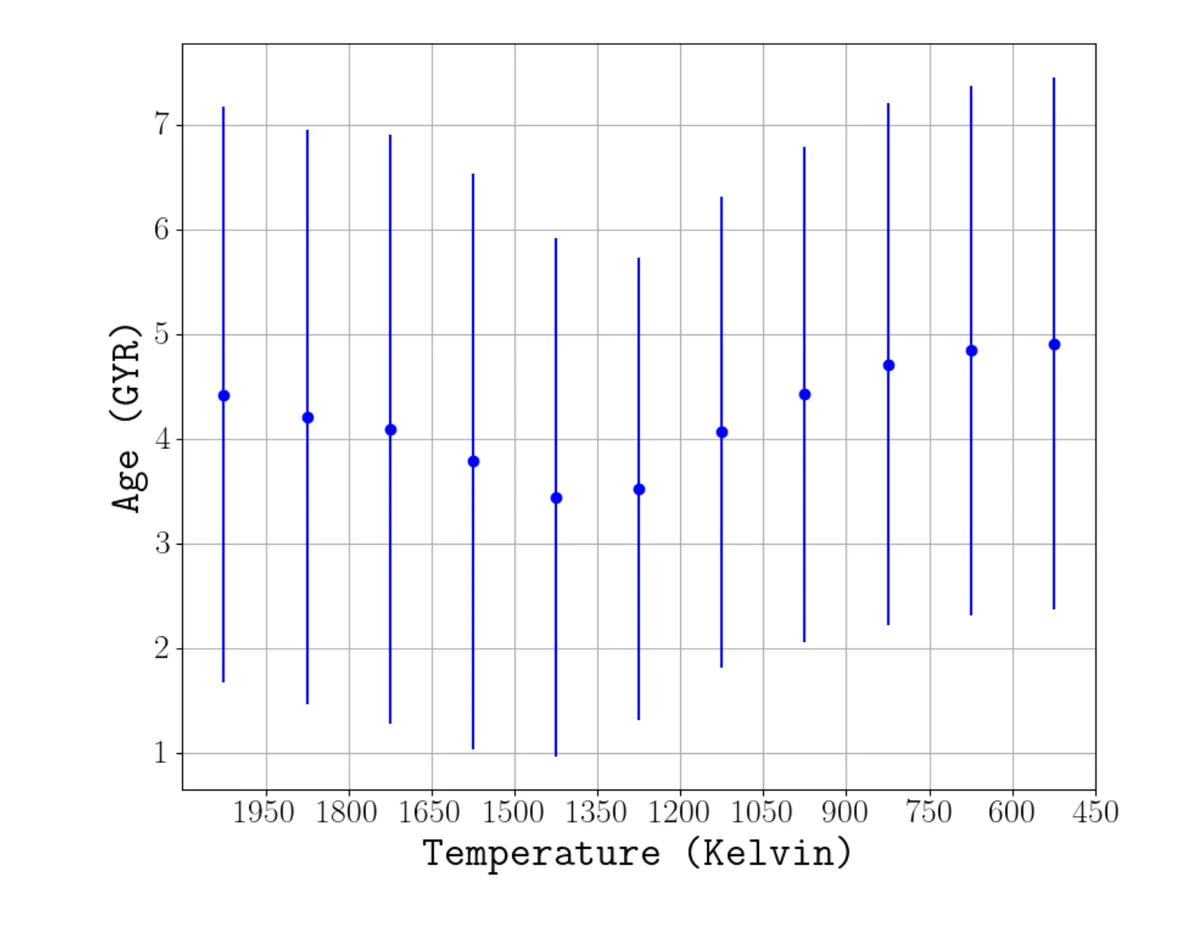
The median-age plot makes the younger population at the transition visible. This is a prediction of the simulations; testing it calls for independent age estimates or observations of clusters with known ages.
When we restrict the population to 8–10 billion years, the L/T bump disappears. The older population has had time to cool beyond it.
Other worlds,
closer looking.
Outside my technical interests, I’m drawn to the art and history of pre-modern Europe and South Asia. Two places to begin looking: the landscape of everyday life, and the worlds built around a story.
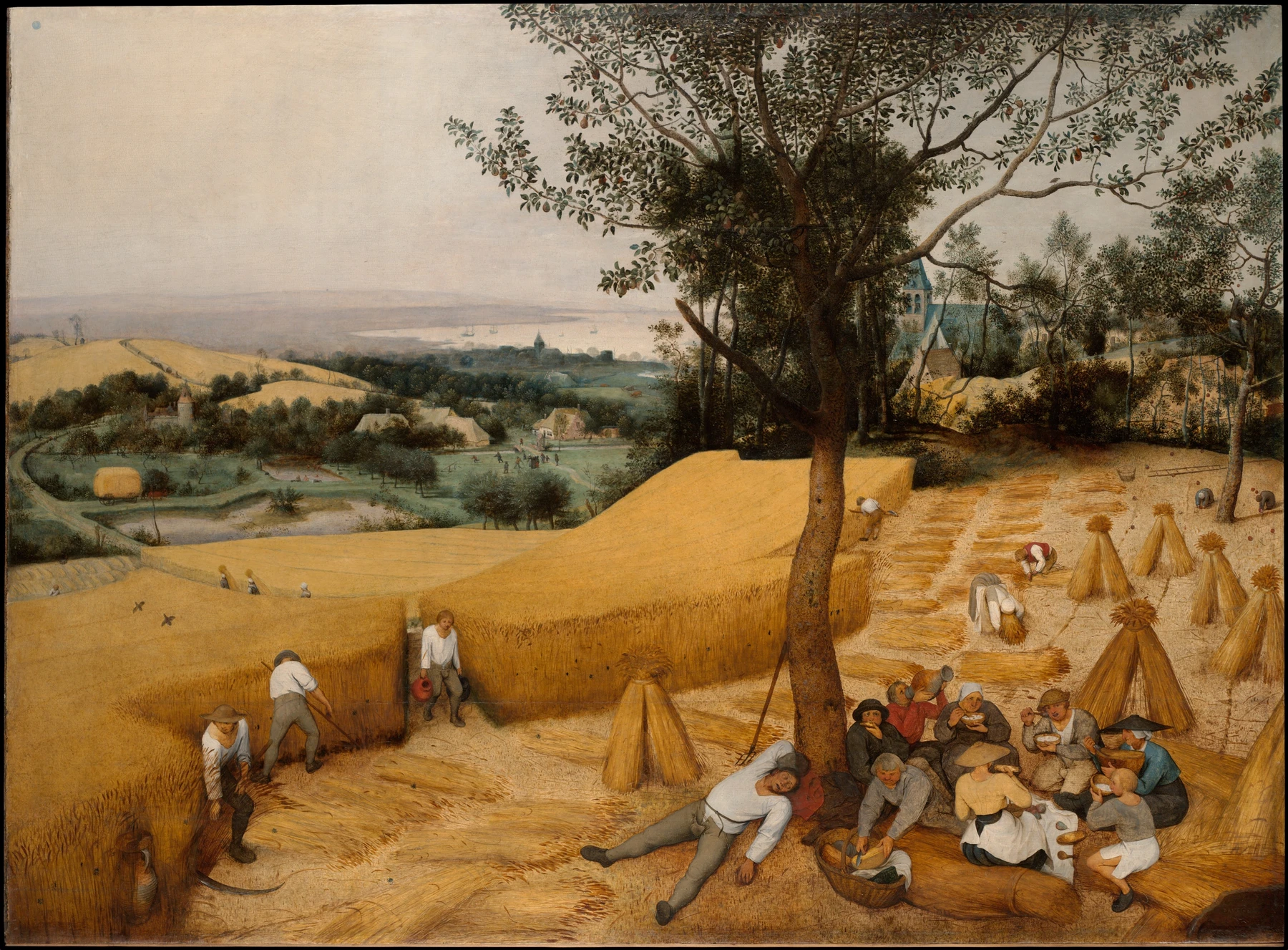
Europe · 1565
Bruegel’s The Harvesters brings work, rest, and the seasons into one expansive scene. Painted for an Antwerp merchant’s country home, it also places everyday rural life within the world of its patron.
Pieter Bruegel the Elder · The Harvesters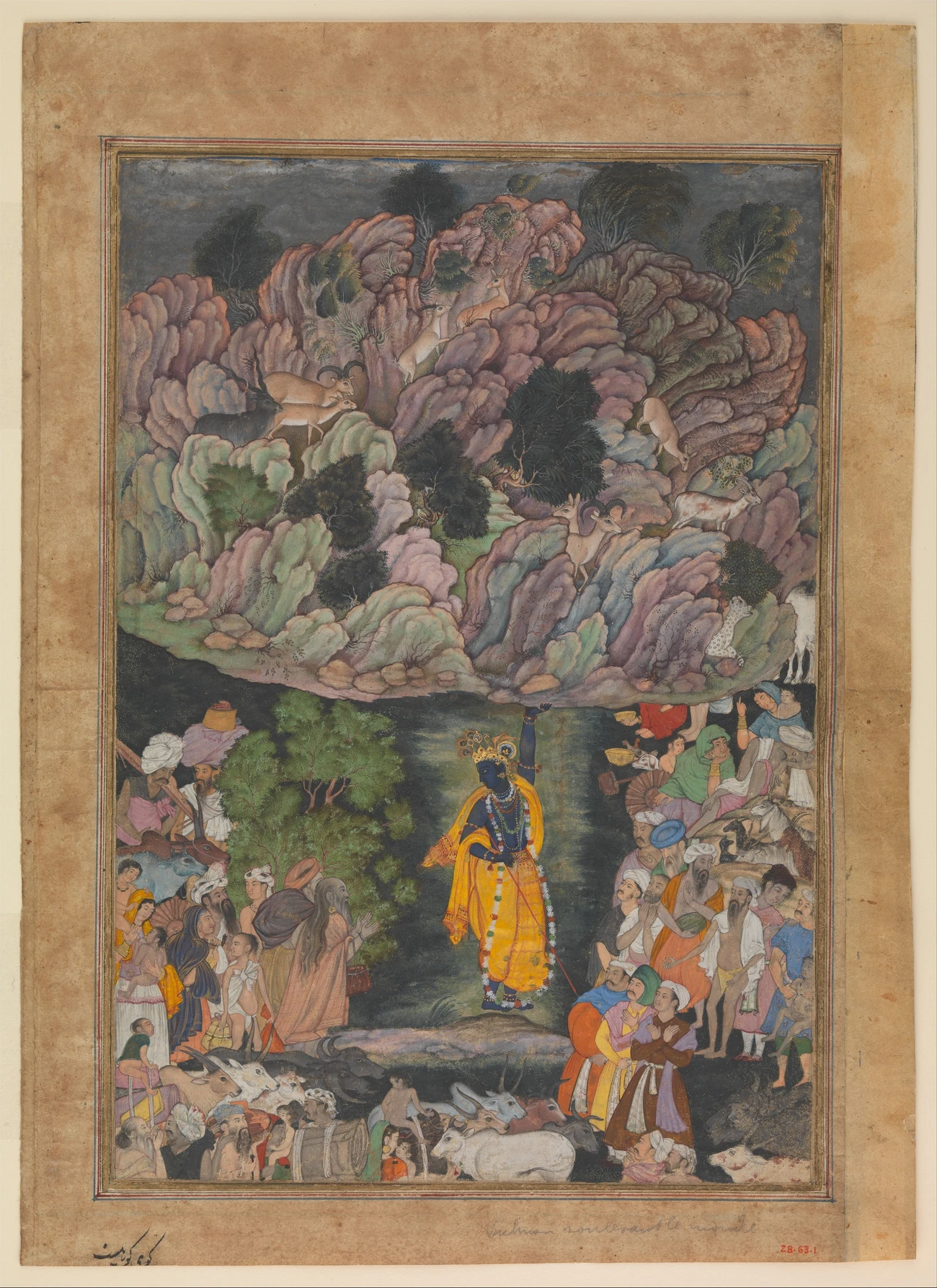
South Asia · ca. 1590–95
In this Mughal Harivamsa folio, Krishna shelters the villagers of Braj beneath Mount Govardhan. A mountain, a community, and a sacred narrative share the space of a single manuscript page.
Krishna Holds Up Mount Govardhan